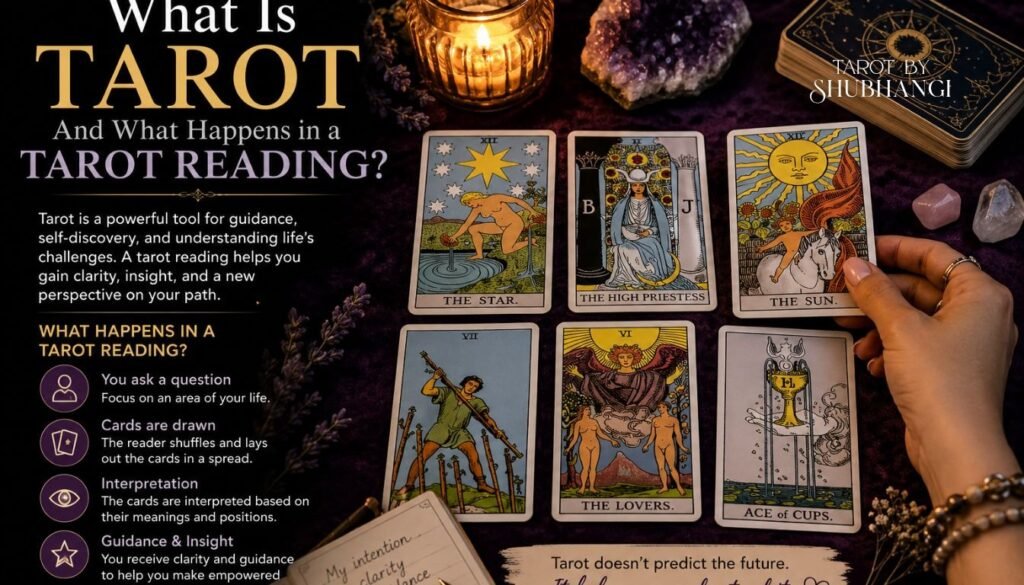
Tarot has fascinated people for centuries, offering a unique blend of symbolism, intuition, and self-reflection. Whether you’ve seen tarot cards in movies, heard friends discuss a reading, or become curious about spiritual practices, you may wonder: What exactly is tarot, and what happens during a tarot reading?
Despite common misconceptions, tarot is not necessarily about predicting the future with absolute certainty. Instead, it is often used as a tool for gaining insight, understanding situations more clearly, and exploring possible paths forward. In this guide, we’ll explore the origins of tarot, how tarot readings work, and what you can expect during a session.
What Is Tarot?
Tarot is a deck of 78 cards, each containing unique imagery, symbolism, and meanings. These cards are traditionally divided into two main sections:
Major Arcana
The Major Arcana consists of 22 cards that represent significant life themes, spiritual lessons, and transformative experiences. Some well-known cards include:
- The Fool
- The Magician
- The High Priestess
- The Lovers
- The Tower
- The Star
- The World
These cards often appear when important life events or personal growth opportunities are present.
Minor Arcana
The Minor Arcana contains 56 cards divided into four suits:
- Cups (emotions and relationships)
- Pentacles (career, finances, and material matters)
- Swords (thoughts, communication, and challenges)
- Wands (creativity, ambition, and action)
Much like a standard deck of playing cards, each suit includes numbered cards and court cards.
The History of Tarot
Tarot cards first appeared in Europe during the 15th century. Originally, they were used as playing cards rather than spiritual tools. Over time, tarot became associated with mysticism, personal insight, and symbolic interpretation.
Today, tarot is practiced worldwide by people from various backgrounds. Some view it as a spiritual practice, while others see it as a psychological tool for self-reflection and decision-making.
How Does Tarot Reading Work?
A tarot reading typically begins with a question, topic, or area of focus. Common topics include:
- Love and relationships
- Career and finances
- Personal growth
- Family matters
- Life transitions
- Spiritual development
The reader shuffles the cards and selects a specific layout, often called a spread. The cards are then interpreted based on their positions, meanings, and relationships to one another.
The process combines traditional card meanings with intuition and contextual understanding.
Common Tarot Spreads
One-Card Reading
A simple reading that provides quick insight into a situation or question.
Three-Card Spread
One of the most popular spreads, often representing:
- Past
- Present
- Future
Or:
- Situation
- Challenge
- Advice
Celtic Cross Spread
A more detailed reading consisting of ten cards that explore multiple aspects of a situation, including obstacles, influences, hopes, and potential outcomes.
What Happens During a Tarot Reading?
A typical tarot reading may include the following steps:
Setting an Intention
The client focuses on a question or area of life they would like guidance on.
Card Selection
The tarot deck is shuffled, and cards are drawn according to the chosen spread.
Interpretation
The reader explains the symbolism and messages within each card while connecting them to the client’s situation.
Discussion and Reflection
Many readings become interactive conversations where insights, feelings, and possibilities are explored.
The goal is often not to provide fixed answers but to encourage clarity and self-awareness.
Can Tarot Predict the Future?
One of the most common questions people ask is whether tarot predicts the future.
Most experienced readers view tarot as a tool for exploring possibilities rather than making guaranteed predictions. Tarot can reveal current energies, patterns, challenges, and opportunities that may influence future outcomes.
Because people have free will and circumstances constantly change, tarot is often best understood as guidance rather than certainty.
Benefits of Tarot Readings
Many people turn to tarot because it offers several potential benefits:
Increased Self-Awareness
Tarot can encourage deeper reflection on thoughts, emotions, and behaviors.
New Perspectives
The symbolism within the cards often helps people see situations from a different angle.
Decision-Making Support
A reading may reveal factors that were previously overlooked.
Emotional Clarity
Tarot can help identify underlying feelings and concerns.
Personal Growth
Many individuals use tarot as part of a broader self-development or spiritual journey.
Common Misconceptions About Tarot
Tarot Is Not Necessarily Fortune-Telling
While some people seek predictions, many readings focus on personal insight and guidance.
Tarot Is Not Inherently Negative
Certain cards may appear challenging, but they often symbolize growth, transformation, or lessons rather than disaster.
Tarot Does Not Require Special Beliefs
People from many different belief systems use tarot for reflection and self-exploration.
How to Prepare for Your First Tarot Reading
If you’re planning your first reading, consider these tips:
- Approach with an open mind.
- Think about areas where you seek clarity.
- Ask thoughtful questions rather than yes-or-no questions.
- Be willing to reflect on the messages presented.
- Remember that tarot is a tool for guidance, not absolute answers.
Final Thoughts
Tarot remains one of the most intriguing and enduring forms of symbolic guidance. Whether you view it as a spiritual practice, a reflective tool, or simply an interesting way to explore life’s questions, tarot offers a unique opportunity to gain insight into your experiences and decisions.
A tarot reading is less about revealing a fixed future and more about helping you understand the present. Through symbolism, intuition, and reflection, tarot encourages self-discovery and can provide valuable perspectives on the challenges and opportunities that lie ahead.
For beginners, the best approach is curiosity, openness, and a willingness to explore the stories the cards may reveal.