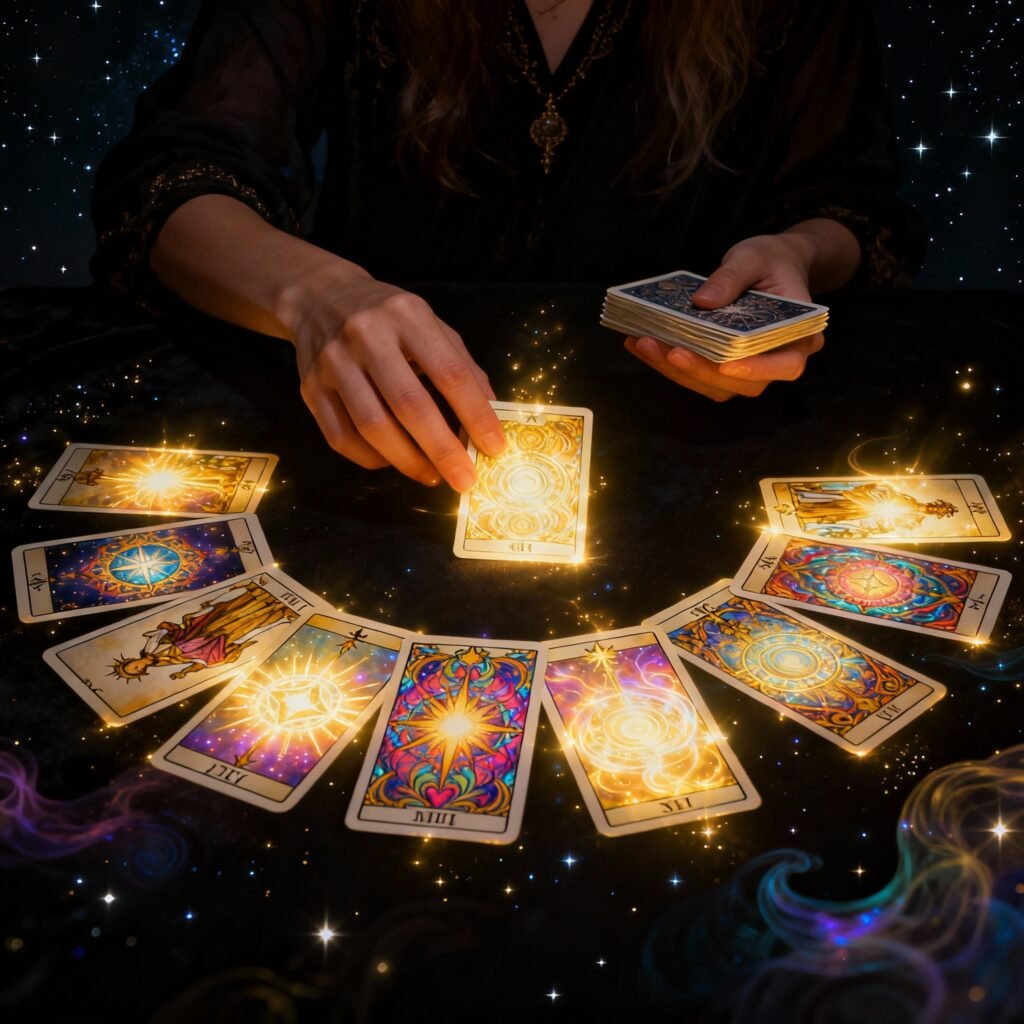
Tarot card reading is an ancient practice that uses a deck of symbolic cards to tap into intuition, explore emotions, and provide guidance on various aspects of life. Whether you seek clarity about your relationships, career, or personal growth, tarot offers a unique way to reflect on your inner self and navigate uncertainty.
What Are Tarot Cards?
A tarot deck typically consists of 78 cards divided into two main groups: the Major Arcana and the Minor Arcana. The Major Arcana includes 22 cards representing significant life themes, spiritual lessons, and archetypal energies—such as The Fool, The Lovers, and The World. These cards often highlight pivotal moments or transformations.
The Minor Arcana, on the other hand, consists of 56 cards divided into four suits—Wands, Cups, Swords, and Pentacles. Each suit corresponds to an element and addresses everyday experiences:
- Wands (Fire): Action, creativity, passion.
- Cups (Water): Emotions, relationships, intuition.
- Swords (Air): Thoughts, challenges, decisions.
- Pentacles (Earth): Material world, work, health.
How Does Tarot Reading Work?
Tarot reading is less about fortune-telling and more about opening channels to your own insight and subconscious knowledge. When you shuffle and draw cards, each card’s imagery and symbolism evoke inner thoughts and feelings, allowing you to perceive situations from new perspectives.
A tarot reader interprets the cards in relation to the question asked, the card arrangement (known as a spread), and the intuition prompted by the images. Different spreads offer different layers of understanding—from simple yes/no answers with one card, to complex Celtic Cross spreads that explore multiple dimensions.
Getting Started with Tarot
- Choose Your Deck
For beginners, the Rider-Waite deck is highly recommended due to its clear symbolism and widespread use. As you become more comfortable, you can explore other decks with unique artistic styles and themes. - Set Your Intention
Before beginning, focus on a question or area you want insight into. Open-ended questions like “What do I need to know about my career?” tend to produce richer readings than yes/no queries. - Shuffle the Cards
Shuffling helps infuse your energy into the deck. You can shuffle traditionally or spread cards on a surface and mix them. Your intuition will guide when to stop. - Choose a Spread
Start simple—a one-card draw for a quick insight or a three-card spread representing past, present, and future. Place cards facedown then reveal them one by one. - Interpret the Cards
Look closely at the imagery, colors, and symbols. Many resources and guidebooks can help, but trust your gut reactions—they are a critical part of tarot’s magic.
Tips for Tarot Beginners
- Practice Daily Draws: Pull one card each morning to meditate on its meaning. This builds familiarity and deepens intuition.
- Keep a Journal: Record your readings, impressions, and outcomes. Reflecting over time reveals patterns.
- Be Patient: Tarot is a skill developed over years. Don’t rush memorizing card meanings; let insights grow naturally.
- Trust Your Intuition: While guidebooks are helpful, the most powerful readings come when you blend knowledge with personal intuition.
Common Tarot Spreads for Beginners
- One-Card Spread: Perfect for daily guidance or yes/no questions.
- Three-Card Spread: Past, present, future; situation, obstacle, advice; or mind, body, spirit.
- Celtic Cross Spread: A detailed 10-card layout exploring complex questions.
The Purpose of Tarot Reading
Tarot provides a mirror to your subconscious, helping you understand motivations, emotions, and potential outcomes. It works as a tool for self-reflection, empowering decision-making, and personal healing. It is not about predicting a fixed future, but rather illuminating paths and possibilities.
The Spiritual Aspect
For many, tarot is a spiritual journey, a way to tap into subconscious wisdom, and align with universal energies. The cards serve as mirrors reflecting your inner world and encouraging mindfulness and self-awareness.
Ethical Reading Practices
It’s essential to observe respect, confidentiality, and consent, especially when reading for others. Tarot readers hold a position of trust and should provide guidance responsibly, focusing on empowerment rather than fear.
Final Thoughts
Tarot card reading invites you on a journey of self-discovery. It encourages compassion for yourself and curiosity about your life’s mysteries. Anyone can learn this art—what matters most is an open heart and a willingness to explore. So, grab your deck, ask a question, and let the cards reveal their wisdom.
Conclusion
Tarot card reading is a fascinating blend of art, intuition, and psychology. Beginners can start simply with daily draws and gradually explore more complex spreads. The key is openness, practice, and trusting your unique connection with the cards. With time, tarot can become a powerful tool to illuminate your path, support your growth, and enrich your understanding of yourself and the world.