Tarot reading is more than interpreting cards; it is about guiding people through life’s questions with honesty and compassion. Sometimes, the cards reveal difficult themes such as loss, conflict, delays, or emotional challenges. In these situations, knowing how to deliver bad news in Tarot reading is one of the most important skills a reader can develop.
People often come to a Tarot reading seeking hope, clarity, or direction. Even when the cards suggest obstacles ahead, the goal of a reader is not to create fear but to help the client understand the situation and make informed choices. A thoughtful and balanced approach can turn a challenging reading into a meaningful and empowering experience.
Understand That Tarot Is Guidance, Not a Prediction
One of the first things every Tarot reader should remember is that Tarot does not determine a fixed future. Instead, the cards reflect current energies, possible outcomes, and areas that deserve attention.
When difficult cards appear, explain that they highlight potential challenges rather than guaranteed events. This approach helps clients understand that their decisions and actions can influence future outcomes.
By presenting Tarot as a guide instead of an absolute prediction, you create a more responsible and supportive reading experience.
Stay Calm and Professional
Your tone of voice and body language play a major role in how the client receives the message.
If you appear shocked or overly emotional after seeing certain cards, the client may become anxious before you’ve even explained their meaning.
Remain calm, speak clearly, and maintain a reassuring attitude. Your confidence helps create a safe environment where the client feels supported rather than frightened.
Professionalism is especially important when discussing sensitive topics.
Avoid Fear-Based Language
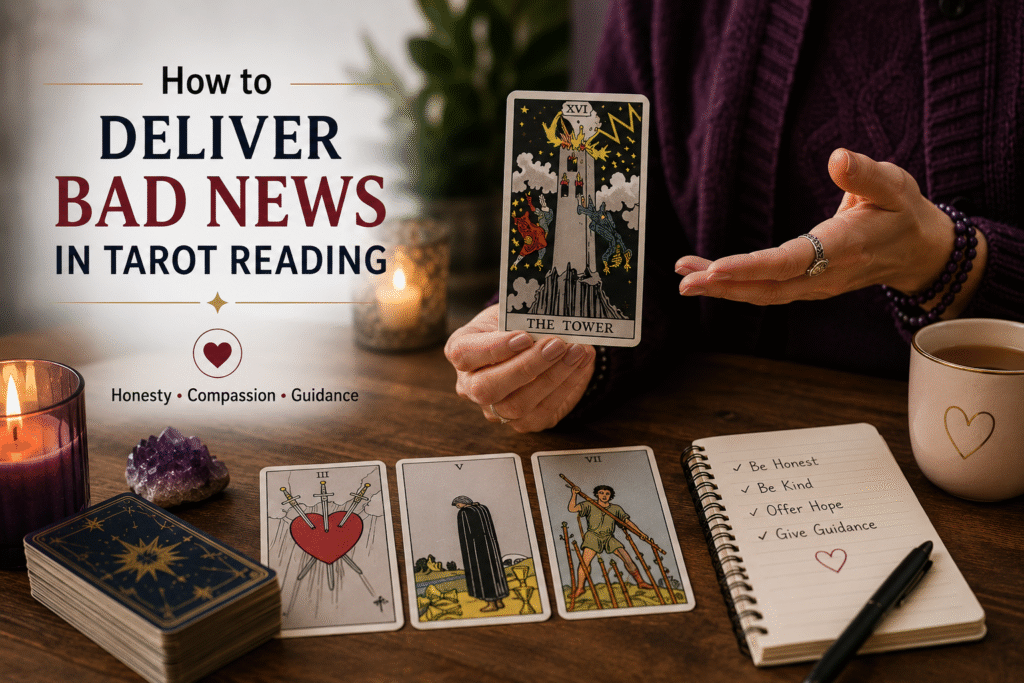
Some Tarot cards have developed dramatic reputations over time. Cards such as Death, The Tower, or the Three of Swords often worry beginners, but they rarely mean exactly what people fear.
Instead of saying:
- “Something terrible is going to happen.”
Try saying:
- “This card suggests a period of significant change or emotional growth.”
Similarly:
- The Death card often represents transformation and new beginnings.
- The Tower may indicate unexpected changes that lead to personal growth.
- Three of Swords can point to emotional healing after disappointment.
Using balanced language helps clients understand the deeper message behind the cards.
Focus on Solutions
Every challenging reading should include practical guidance.
After discussing possible obstacles, ask questions such as:
- What can you learn from this situation?
- What action can help improve the outcome?
- Which strengths can you rely on?
- What opportunities may appear after this challenge?
Tarot is most valuable when it encourages constructive action rather than fear.
Clients appreciate readings that offer hope alongside honesty.
Be Honest Without Being Harsh
Honesty is essential in Tarot reading, but kindness matters just as much.
Avoid making absolute statements like:
- “Your relationship will definitely end.”
- “You will lose your job.”
- “This will never work.”
Instead, use language that reflects possibilities:
- “The cards suggest tension that may require honest communication.”
- “There may be challenges in your current work situation.”
- “This path could require more patience and planning.”
This approach respects both the symbolism of the cards and the client’s emotional well-being.
Encourage Reflection
Rather than giving all the answers, encourage the client to think about how the cards relate to their own experiences.
Ask thoughtful questions such as:
- Does this situation feel familiar?
- What part of your life needs attention right now?
- What changes have you been avoiding?
Reflection helps clients become active participants in the reading instead of passive listeners.
Respect Emotional Boundaries
Some clients may become emotional during difficult readings.
Allow them time to process the information. Listen without judgment and avoid rushing through the session.
If someone appears distressed, gently remind them that Tarot is a tool for reflection and guidance, not certainty.
Showing empathy builds trust and demonstrates professionalism.
Know Your Limits
Tarot readers should avoid presenting themselves as medical, legal, or financial experts.
If a reading touches on serious issues such as illness, legal disputes, or mental health concerns, encourage the client to seek advice from qualified professionals.
Tarot can provide emotional insight, but it should not replace professional guidance in critical situations.
Understanding these boundaries protects both the reader and the client.
End Every Reading with Hope
Even if the overall reading is challenging, try to finish on a positive and empowering note.
Highlight the client’s strengths, opportunities for growth, or practical next steps.
For example:
- Focus on healing rather than heartbreak.
- Emphasize learning rather than failure.
- Encourage resilience instead of fear.
A hopeful conclusion helps clients leave the session feeling supported and motivated.
Common Mistakes to Avoid
When delivering difficult Tarot messages, avoid these common errors:
- Using frightening or dramatic language.
- Claiming that the future is fixed.
- Predicting death or serious illness.
- Giving absolute yes-or-no answers about life-changing events.
- Ignoring the client’s emotional reaction.
- Offering advice outside your area of expertise.
Avoiding these mistakes helps create ethical and respectful Tarot readings.
Building Trust as a Tarot Reader
Clients return to Tarot readers who communicate with honesty, compassion, and professionalism.
Trust grows when readers:
- Explain the symbolism clearly.
- Listen carefully.
- Respect confidentiality.
- Offer balanced interpretations.
- Encourage personal growth instead of fear.
These qualities help establish a positive reputation and create meaningful connections with clients.
Conclusion
Learning how to deliver bad news in Tarot reading is an essential part of becoming a responsible and ethical Tarot reader. Challenging cards do not have to create fear. When interpreted with empathy, honesty, and balance, they can provide valuable insight and encourage positive change.
The purpose of Tarot is not to predict unavoidable outcomes but to help people understand their current path and make thoughtful decisions. By staying compassionate, avoiding fear-based language, focusing on solutions, and respecting your professional boundaries, you can turn even the most difficult reading into an experience that inspires growth, resilience, and hope.