Starting your tarot journey is an exciting experience, and selecting your first deck is a crucial step. Whether you’re drawn to tarot for spiritual guidance, self-discovery, or creative exploration, understanding how to choose the right deck will set you up for success and enjoyment.
Understanding Tarot Basics
Before diving into deck selection, it’s helpful to know that a standard tarot deck contains 78 cards divided into two sections: the Major Arcana (22 cards representing significant life themes) and the Minor Arcana (56 cards organized into four suits—Cups, Wands, Swords, and Pentacles). Understanding this structure helps you choose a deck that aligns with your learning style and interests.
The Myth About Buying Your Own Deck
Many beginners worry that they must receive their first tarot deck as a gift. This is simply not true. While there’s nothing wrong with receiving a gifted deck, you can absolutely purchase your own first tarot deck. Modern tarot readers unanimously confirm that buying your own deck is perfectly acceptable and allows your tarot experience to be entirely personal and meaningful to you.
Step 1: Start with the Rider-Waite-Smith Deck for Beginners
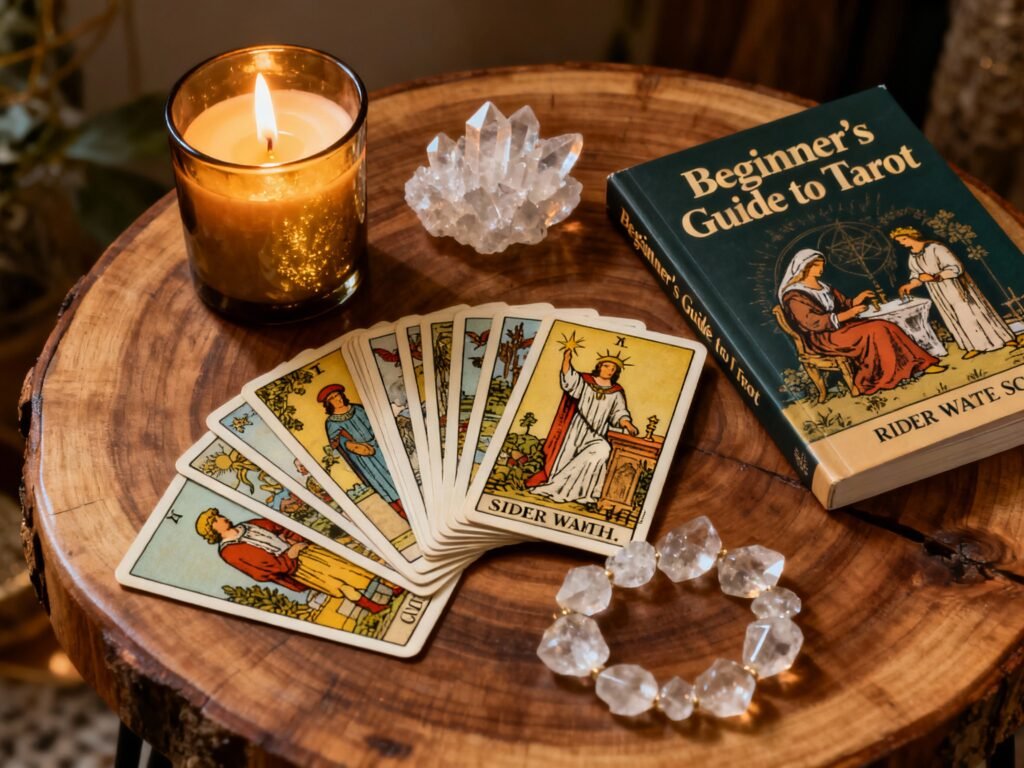
The most widely recommended first deck for beginners is the Rider-Waite-Smith (often called Smith-Waite) deck. Created in 1910, this deck revolutionized tarot by introducing illustrated scenes rather than simple symbols on each card. Here’s why it’s ideal for beginners:
The deck’s rich imagery acts as a visual guide, allowing you to interpret cards through illustration before relying heavily on guidebooks. Most tarot learning resources and books reference this deck’s symbolism, making your research and learning process significantly easier. When you encounter interpretations online or in books, the imagery matches what you hold in your hands, preventing confusion and frustration.
Step 2: Consider Deck Variations and Alternatives
If the classic Rider-Waite-Smith doesn’t appeal to you aesthetically, consider modern variations that follow the same symbolic structure and imagery. Popular beginner-friendly alternatives include the Morgan Greer Tarot Deck and the Modern Witch Tarot Deck. These maintain the symbolic foundation of Rider-Waite-Smith but offer updated or thematic artwork that may resonate more with your personal style.
Avoid decks with highly abstract, minimalist, or heavily stylized imagery as your first deck. While they may be beautiful, they often lack the visual storytelling that helps beginners naturally learn card meanings without constant reference material.
Step 3: Trust Your Intuition and Personal Connection
While practical recommendations favor Rider-Waite-Smith variations, your intuition matters. Take time to browse different decks online or in stores and observe how the artwork makes you feel. Does the imagery inspire calm, excitement, or creativity? Does the aesthetic reflect your personality—whether that’s nature-themed, modern, celestial, or whimsical? Pay attention to your gut reaction. If you feel drawn to a deck and its artwork speaks to your soul, that emotional connection will enhance your learning experience and motivation to practice.
Step 4: Ensure Your Deck Comes with a Guidebook
Choose a deck that includes a comprehensive guidebook or companion booklet. This is essential, especially early in your tarot journey. The guidebook provides specific card meanings, interpretations, and spreads tailored to your particular deck, making learning more straightforward and preventing confusion.
Step 5: Consider the Deck’s Structure and System
Understanding a deck’s foundational system helps you choose wisely. Most beginner decks follow the Rider-Waite system, but some decks are based on other traditional systems:
Rider-Waite-Based Decks: Intuitive imagery with clear storytelling—ideal for beginners. The illustrated scenes on each card make interpretation accessible without deep occult knowledge.
Thoth Tarot: Features abstract, esoteric symbolism rooted in the Golden Dawn tradition. Better suited for advanced readers with existing occult knowledge.
Marseille Tarot: Relies heavily on numerology and classical imagery. Also better for intermediate to advanced readers.
Step 6: Don’t Overthink Your First Purchase
Remember that your first tarot deck doesn’t need to be perfect or permanent. Many experienced readers own multiple decks for different purposes. If you start with Rider-Waite-Smith and later discover another deck that resonates more deeply with you, you can always add to your collection.
Getting Started with Your New Deck
Once you’ve selected your deck, the next phase involves familiarizing yourself with it. Begin by learning the 22 Major Arcana cards first—they’re the most impactful and easiest to remember. Pull one Major Arcana card daily, look up its meaning, and journal how it relates to your day. Gradually add the Minor Arcana suits one at a time, building your knowledge systematically rather than trying to memorize all 78 cards at once.
Final Thoughts
Choosing your first tarot deck is about balancing practical learning considerations with personal intuition. Start with a deck based on Rider-Waite symbolism for easy reference and learning, ensure it includes a guidebook, and most importantly, select one that visually resonates with you. Your connection to the artwork and symbolism will deepen your practice and keep you engaged as you develop your tarot reading skills. Trust the process, be patient with yourself, and enjoy discovering the wisdom of the cards.